

Blog
Biltong vs Jerky 2025: Why Air‑Dried Protein Leads Healthy Snacking Trends

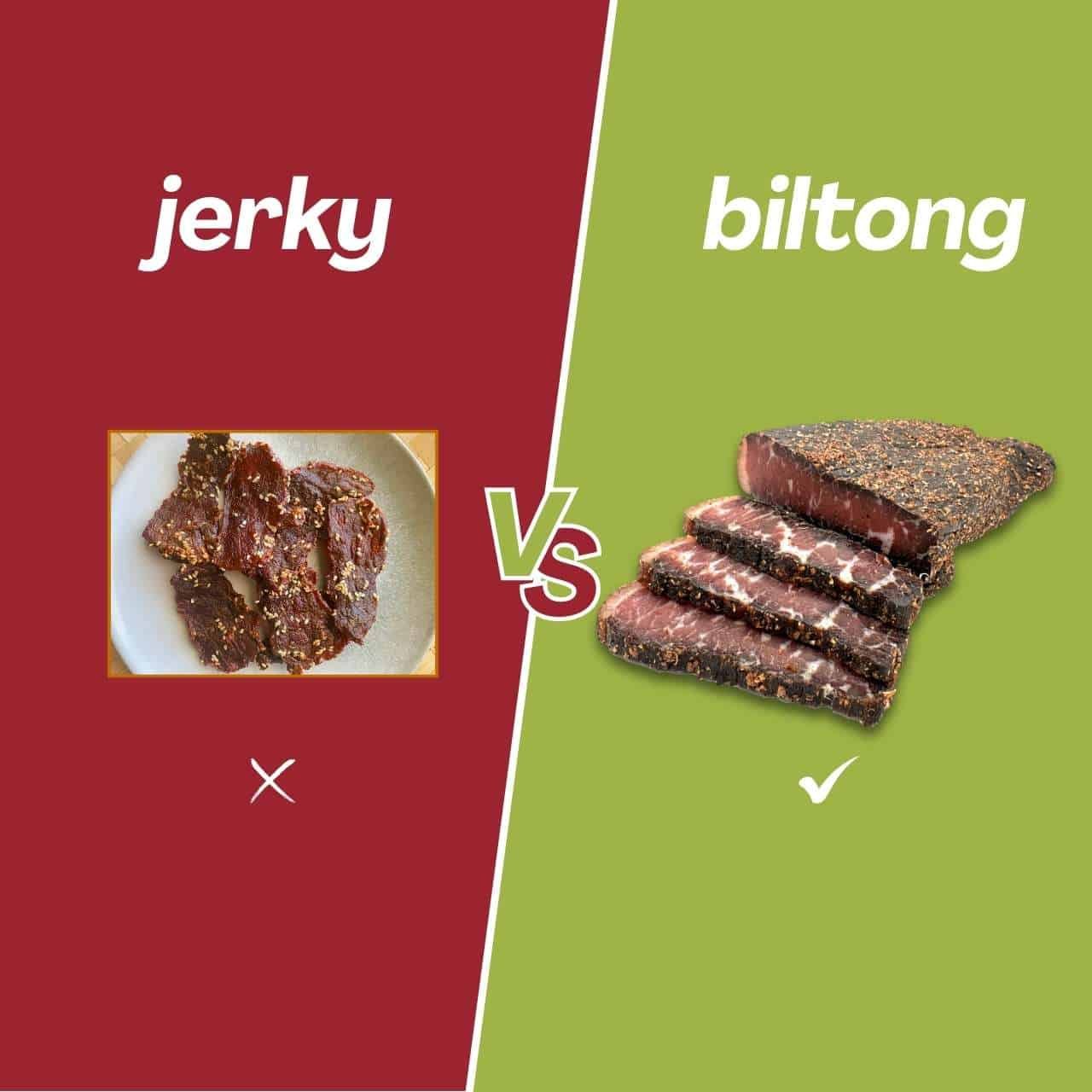
Let’s cut through the noise about protein snacks for a second. When was the last time you actually checked what’s in your “healthy” jerky? Most have more added sugar than a candy bar, which is probably not what you’re going for on that clean eating journey.
When comparing Biltong vs Jerky, it’s essential to consider the ingredients and nutritional value of each.
Biltong vs jerky isn’t just a preference battle—it’s about which one actually delivers on the protein-packed, low-carb promises without sneaking in preservatives that wreck your nutrition goals. Air-dried meat snacking is projected to grow 12% annually through 2025, and there’s a reason why fitness enthusiasts are making the switch.
Understanding the differences between Biltong vs Jerky can help you make healthier snack choices.
I’ve spent five years testing every meat snack on the market, and the difference in how your body responds to truly clean biltong versus commercial jerky is night and day. But the real question isn’t which tastes better—it’s which one is secretly sabotaging your health efforts.
This is where the debate of Biltong vs Jerky becomes critical for health-conscious snackers.
The Rise of Air-Dried Protein Snacks in 2025
Biltong vs Jerky: Key Nutritional Differences
Let’s dive deeper into Biltong vs Jerky and their implications for your diet.
Current healthy snacking market statistics
The numbers don’t lie – protein snacks are absolutely dominating the market in 2025. Sales of air-dried protein options jumped 43% last year alone, with the global market now valued at $8.7 billion.
The Biltong vs Jerky argument is more relevant now than ever before.
What’s really interesting? Nearly 67% of consumers now check protein content before calories when selecting snacks. That’s a complete flip from just three years ago.
The average American now consumes 4-5 protein snacks weekly, up from just 2-3 in 2022. And it’s not just fitness enthusiasts – parents, busy professionals, and health-conscious seniors are all driving this trend.
Consumer shift toward high-protein, low-processing options
In this context, the Biltong vs Jerky comparison highlights consumer preferences shifting towards less processed options.
Gone are the days when people settled for heavily processed protein bars loaded with artificial ingredients. Today’s consumers want clean protein without the junk.
Air-dried protein snacks hit this sweet spot perfectly. They offer:
- Minimal ingredients (typically just meat, spices, and salt)
- No artificial preservatives
- Higher protein-to-calorie ratio than most snacks
- Longer shelf life without refrigeration
The stats back this up: 78% of snack buyers now rank “minimal processing” as their top priority, with 63% specifically seeking options with five ingredients or fewer.
Why air-drying has replaced other preservation methods
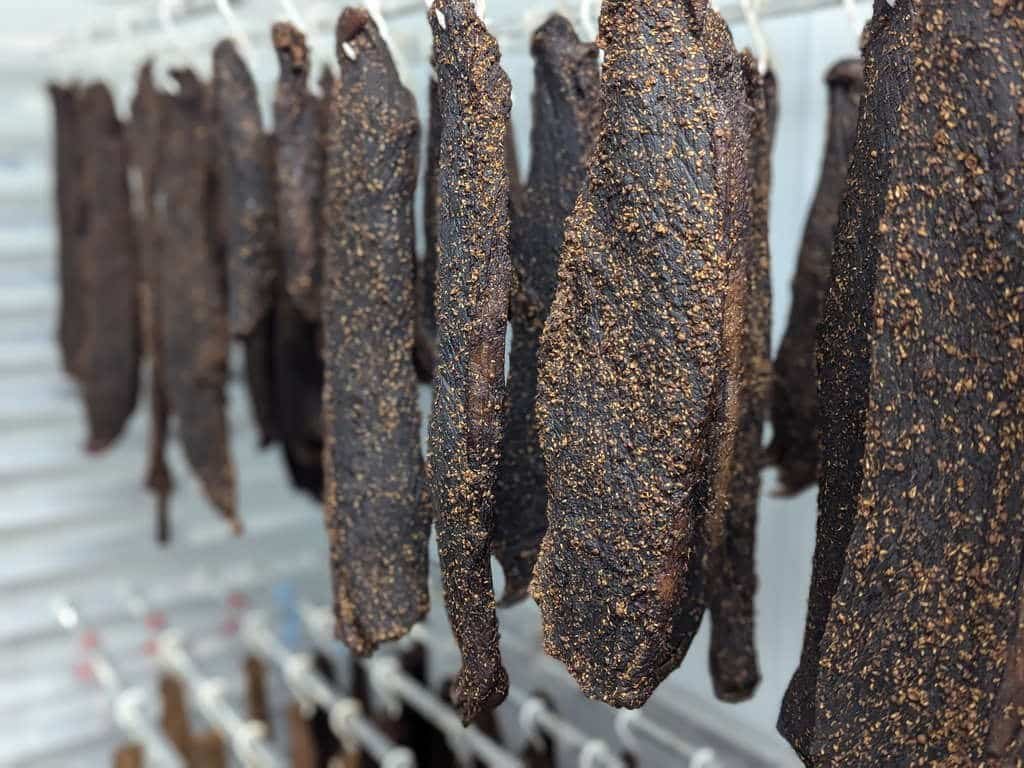
Biltong hanging while air drying
These methods significantly affect the Biltong vs Jerky discussion on health benefits.
Air-drying isn’t new – it’s ancient. But it’s crushing modern preservation techniques for good reason.
Traditional jerky is often made with high heat, which can damage proteins and nutrients. Freeze-drying is expensive and energy-intensive. Chemical preservation? Consumers are running from that faster than you can say “sodium nitrite.”
Air-drying preserves more nutrients while creating a more tender texture. The slow process allows flavor development that quick-drying methods can’t match.
Manufacturers have caught on, investing heavily in advanced air-drying technology that maintains food safety while reducing processing time from weeks to days.
Environmental impact considerations driving consumer choices
The carbon footprint of our snacking habits matters more than ever in 2025.
Air-dried protein production typically uses 61% less energy than traditional jerky manufacturing. The minimal packaging requirements (no refrigeration needed) further reduce environmental impact.
When it comes to sustainability, the Biltong vs Jerky conversation cannot be ignored.
Consumers are noticing. In a recent survey, 72% of protein snack buyers cited environmental considerations as “important” or “very important” in their purchasing decisions.
The most successful brands are those that are transparent about their sourcing, with locally sourced, grass-fed, and regenerative agriculture practices becoming major selling points rather than niche differentiators.
Biltong: The South African Protein Powerhouse
In South Africa, the cultural significance of Biltong vs Jerky is evident.
A. Traditional preparation methods and cultural significance
Ever watched someone lovingly prepare biltong? It’s like watching a ritual that’s been passed down for generations.
South Africans don’t just make biltong – they celebrate it. The process dates back to indigenous tribes and Dutch settlers who needed to preserve meat without the aid of refrigeration. They’d cut meat into strips, massage it with salt, vinegar, and spices, then hang it to dry in the cool air.
No heat. No rushing. Just patience.
What makes biltong special is this air-drying process. While Americans might fire up dehydrators for jerky, South Africans let nature do the work. The meat cures slowly, developing deeper flavors and maintaining more nutrients.
In South Africa, biltong isn’t just food – it’s tradition. It’s the snack at rugby matches, family gatherings, and road trips. Making biltong remains a proud skill passed between generations.
B. Nutritional profile: protein, fat, and micronutrient content
Biltong isn’t just delicious – it’s a nutritional powerhouse. Here’s what you’re getting in each savory bite:
| Nutrient | Amount per 1oz | Benefit |
|---|---|---|
| Protein | 14-16g | Muscle repair and growth |
| Fat | 1.5-3.5g (lean varieties) | Lower than most snacks |
| Iron | 1.6mg | Energy and oxygen transport |
| Zinc | 3mg | Immune function support |
| B12 | 1.4μg | Brain and nervous system health |
The protein content in biltong surpasses that of most other snack options. We’re talking about complete protein, which contains all the essential amino acids your body needs.
And the micronutrients? They’re intact because biltong isn’t cooked – it’s air-dried. Heat damages nutrients, but the gentle air-drying preserves them.
C. Distinctive flavor profile and texture benefits
Ultimately, the flavor difference in Biltong vs Jerky can affect your taste preferences.
Biltong’s flavor is something else entirely. The vinegar marinade creates a tangy undertone that jerky typically lacks. There’s depth here – savory, slightly sour, with hints of coriander and pepper that develop during the drying process.
Texture-wise, biltong wins big. It’s not tough or leathery like some jerky. The slow air-drying creates a chewy exterior with a slightly moist center. You can actually enjoy it without feeling like you’re working your jaw muscles to the point of exhaustion.
The cut matters too. Biltong is typically sliced against the grain after drying, making it easier to bite and chew. This means you can get thicker, more satisfying pieces that remain tender.
D. Low sugar and carb advantages for modern diets
When considering snacking options, the Biltong vs Jerky debate plays a significant role.
The keto crowd and low-carb enthusiasts have embraced biltong for good reason. While jerky often hides behind a sweet mask of added sugars, biltong keeps it honest with virtually zero carbs.
Traditional biltong contains:
- 0-1g carbs per serving
- No added sugars
- No artificial preservatives
This makes biltong perfect for intermittent fasting, keto, paleo, and other carb-conscious eating styles. The absence of sugar also means stable blood glucose levels – no energy crashes an hour after snacking.
The clean ingredient list aligns perfectly with the whole food movement that’s dominating 2025’s health trends. People want simple, recognizable ingredients, and biltong delivers precisely that.
E. Popular biltong varieties and innovations in 2025
Biltong has evolved significantly from its traditional roots. In 2025, we’re seeing incredible innovations:
As innovations continue, the Biltong vs Jerky conversation evolves with consumer trends.
Grass-fed biltong has become the gold standard, with regenerative farm sourcing emerging as a new bragging right among premium brands.
Flavor profiles have expanded beyond traditional spices. Now you’ll find:
- Umami mushroom-infused beef biltong
- Chimichurri-marinated venison varieties
- Smoked paprika and lime game options
- Plant-based alternatives using mushrooms and jackfruit
Texture innovations have created “tender cut” options specifically designed for kids and seniors who want the nutrition without the chewiness.
Subscription services delivering craft biltong varieties monthly have exploded in popularity, with artisanal makers focusing on small-batch production using heritage meat breeds.
The most exciting development? Personalized biltong programs that adjust spice blends and nutrient profiles based on your health data and taste preferences.
This personalized approach in the snack sector adds another layer to the Biltong vs Jerky comparison.
Enjoy the rich flavor and tradition of authentic Biltong with Yebo Biltong’s premium range of snacks. Our Natural Biltong delivers a clean, classic taste, while the spicy Natural Chili Biltong is perfect for those who crave heat. For a heritage-rich option, the Traditional Biltong offers savory depth, and our Chili Droewors brings bold flavor in every bite. Whether you’re looking for high-protein snacks or a taste of home, our handcrafted South African Biltong and droewors are made to satisfy.
Ultimately, whether you prefer Biltong vs Jerky, the choice is about your health and taste.