Blog
From Field to Flavor: The Journey of South African Biltong Craftsmanship

The Story of South African Biltong: A Journey from Field to Flavor
Every great food tells a story, and in South Africa, few stories run deeper than that of South African Biltong. It’s a taste that connects generations, a process that honors patience and simplicity, and a craft that turns something as humble as beef and spice into something unforgettable. Biltong isn’t just made, it’s crafted, step by step, with care and patience. Every piece tells a story that begins long before the first slice ever reaches your hands, a story shaped by South African soil, spice, and tradition. So let’s slow things down for a moment. Let’s walk through that journey, where South African biltong begins, how it’s crafted, and why true biltong will always be more than just a snack.
Long before the spices and the drying rooms, there’s the beef, and that’s where everything begins. The best South African Biltong doesn’t come from shortcuts or mystery meat; it comes from quality cattle, raised well and respected. South African tradition has always valued good beef, lean, flavorful, and naturally rich.
That respect for the source is what sets authentic biltong apart. In the old days, farmers would select their meat carefully, trimming away excess fat, choosing the cuts that would dry evenly, and preparing them by hand. The process wasn’t industrial or automated; it was instinctive. They knew, by touch and sight, which pieces would yield the perfect flavor and texture.
At Yebo Biltong, that tradition continues. We still begin with premium cuts of lean beef, trimmed with precision to ensure consistency and purity. There’s no grinding, no blending, just real meat, cut the way it’s meant to be. It’s honest food, prepared the way generations before us have done it.
When you see biltong hanging in its final, perfect form, it’s easy to forget how much care goes into every step before that moment. It’s not as simple as slicing beef and leaving it to dry; it’s an intricate process, one that balances flavor, preservation, and time.
Once the beef is cut and seasoned, this is where the craft truly takes shape.
There’s no secret powder or industrial marinade. Just the essentials: coriander, black pepper, salt, vinegar, and Worcestershire sauce. Those few ingredients have been the heart of South African Biltong for centuries. Each one plays a role: the vinegar tenderizes and preserves, the coriander brings warmth and brightness, the pepper adds a little edge, and the salt draws out the moisture while locking in the flavor.
At Yebo, we measure those ingredients the way South African butchers have always done it. The spices must cling to the meat just right, coating it evenly but not overpowering it. The goal isn’t to cover the beef’s natural flavor; it’s to complement it.
That’s the beauty of real biltong—it celebrates simplicity.
Once seasoned, the beef rests. This step is often overlooked, but it’s essential. The resting period allows the spices and vinegar to sink deep into the meat, building the layers of flavor that make each slice of biltong distinct. It’s where patience pays off.
The resting can last hours or even days, depending on the thickness of the cuts and the desired flavor profile. It’s a slow, deliberate process that connects back to the roots of South African preservation, when the climate and environment demanded a food that could endure. After that, the real magic begins: the air-drying. Unlike jerky, which is cooked or dehydrated with heat, biltong is never cooked. Instead, it’s hung to dry naturally, using time and air to do what no machine can replicate.
The room must be just right, with controlled airflow, consistent temperature, and balanced humidity. Too much heat, and the meat toughens. Too little, and it won’t dry properly. This is where craftsmanship becomes an art. Experienced makers can tell by sight and touch how the South African Biltong is progressing. They’ll test flexibility, feel for moisture levels, and adjust airflow if needed.
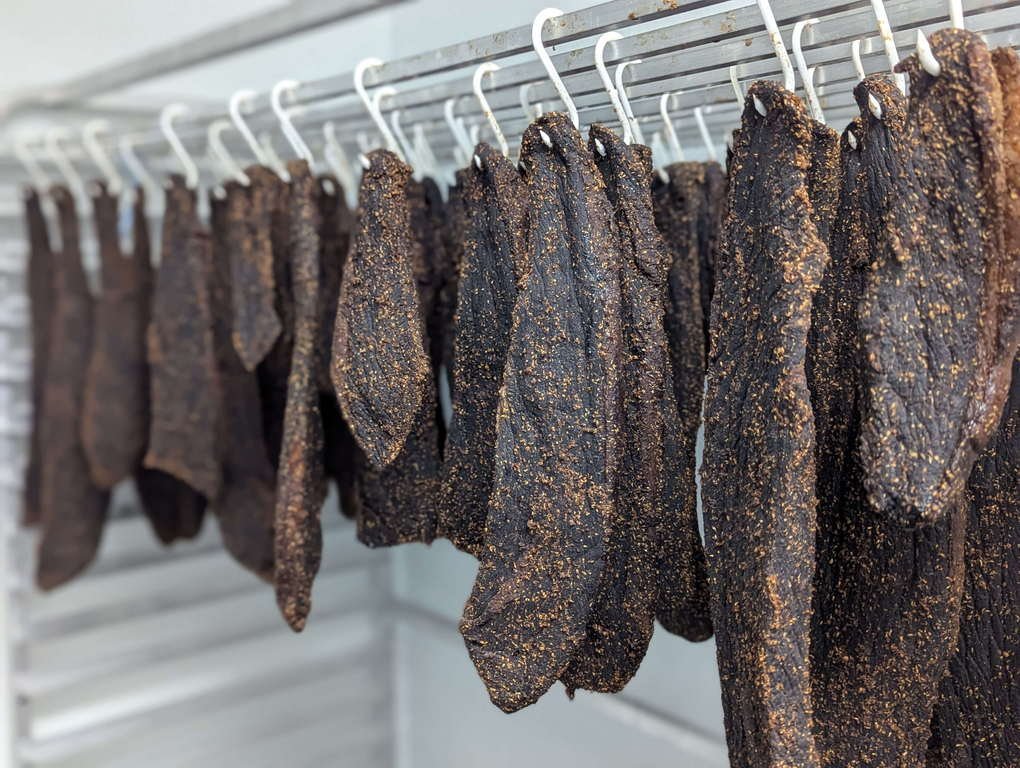
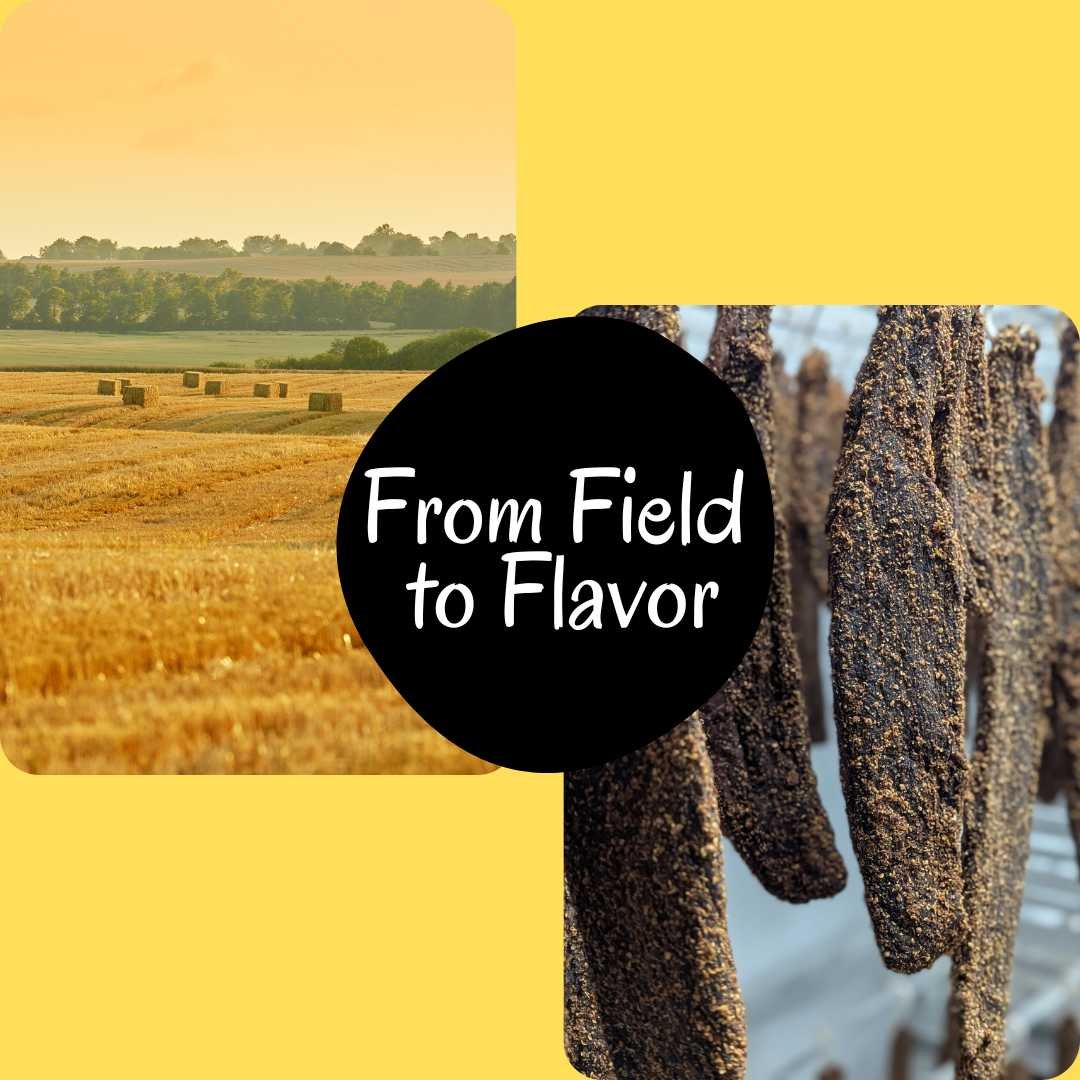
Close-up of strips hanging from hooks in a temperature-controlled room
Each strip of biltong dries at its own pace. Some pieces stay softer and tender, others firm up with a beautiful chew. Both are right, it’s just a matter of personal preference. Some people love a moist, “wet” biltong that’s almost silky inside; others prefer a drier, more concentrated bite. Either way, it’s real food, naturally preserved and perfectly seasoned. When the drying is done, the slicing begins, and that’s when the aroma fills the air. The smell of coriander and vinegar mingling with rich, cured beef is unmistakable. It’s a scent that every South African knows by heart. It’s the smell of home, of heritage, of something made with care.
That first slice tells you everything. The texture, the color, the balance; each piece reflects the hands that made it. And when it’s done right, as it is at Yebo, you can taste every step of the journey. The field. The spice. The patience. The craft.
It’s not just food, it’s a story you can chew.
Biltong has deep roots in South African history. Long before refrigeration, drying meat was a necessity. It wasn’t about convenience; it was about survival. The early Dutch settlers, known as the Voortrekkers, brought with them preservation techniques from Europe, which they adapted to the harsh South African climate. The indigenous Khoisan people had already perfected their own methods of curing and drying meat long before that. The result was a perfect marriage of cultures; simple, natural preservation that turned necessity into flavor.
Over time, what began as a practical way to store food became something much more: a culinary tradition, a shared identity. Every South African family has a biltong memory. Some remember it hanging above the kitchen counter as children, the smell filling the room. Others think of road trips with a brown paper bag full of biltong being passed around. For some, it’s a snack shared at rugby games, at markets, or around a braai fire. It’s woven into everyday life, from the city to the farm, from one generation to the next.
At Yebo Biltong, we bring that heritage into modern life, keeping the authentic process alive while ensuring it fits today’s pace. Our air-dried, preservative-free South African Biltong is crafted with the same principles as those early pioneers used, but with careful control and consistency that modern technology allows. We don’t change the process; we refine it. Because craftsmanship isn’t about doing things the easy way, it’s about doing them the right way.
That’s why our biltong will never taste like jerky, and it never should. The difference isn’t just in flavor; it’s in philosophy. Jerky is cooked fast. Biltong is dried slow. Jerky uses sugar and heat to create taste. South African Biltong uses air, spice, and time to develop it. One is manufactured; the other is nurtured.
Every pack of Yebo Biltong is the result of care—from the beef we choose to the drying rooms we monitor to the way we slice and package each batch by hand. It’s not mass production; it’s tradition, preserved and perfected.
That’s also why people can feel the difference when they eat it. It’s not just texture or seasoning, it’s energy. It’s real food made from real ingredients, giving your body the fuel it understands. Whether you’re an athlete, a traveler, or someone simply craving something honest, South African Biltong fits seamlessly into your day. It’s snackable, but it’s also substantial. It’s practical, but it’s also deeply cultural.
And beyond the flavor, there’s something else: pride. For South Africans, biltong isn’t just about eating, it’s about belonging. It’s something that carries home wherever you go. It’s why you’ll find expats in London or New York lighting up when they see a bag of authentic South African Biltong on a shelf. It’s a taste that transports you instantly, not just to a flavor, but to a feeling.
That feeling is what Yebo exists to preserve.

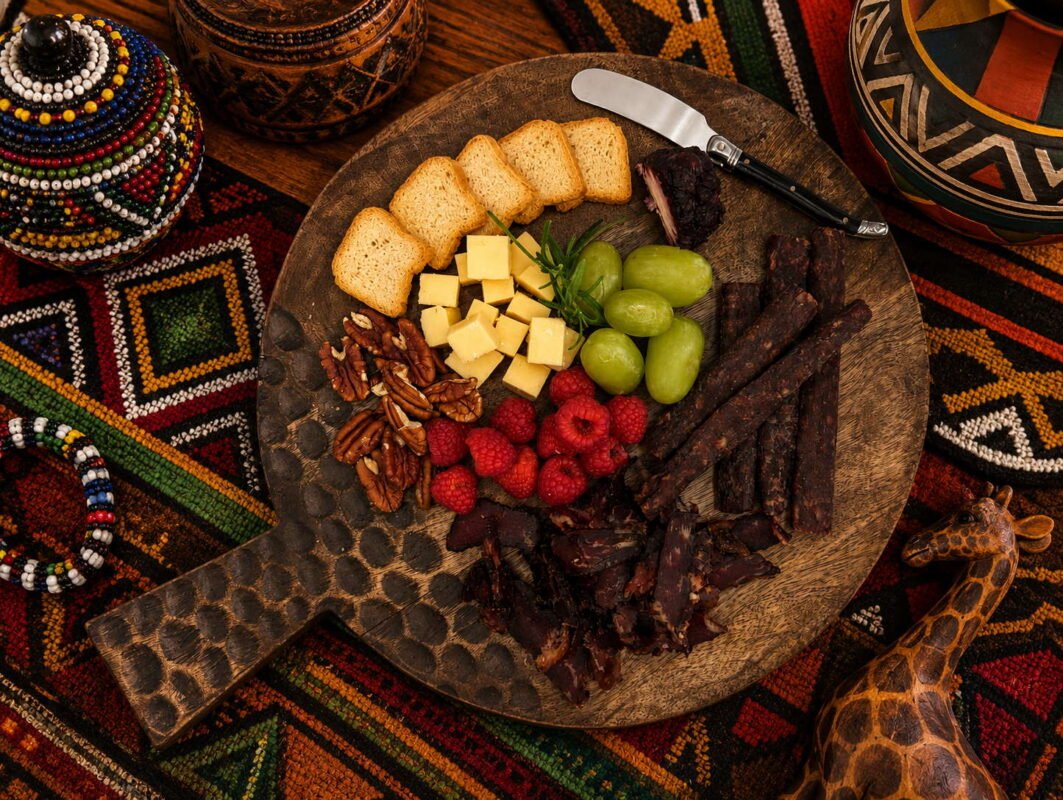
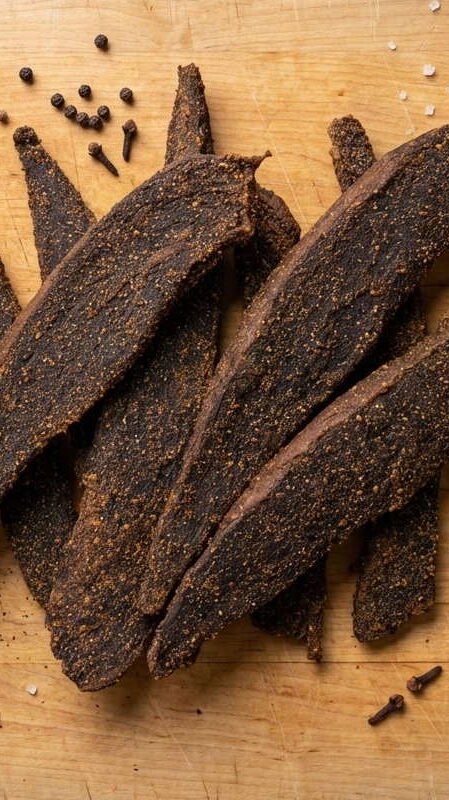
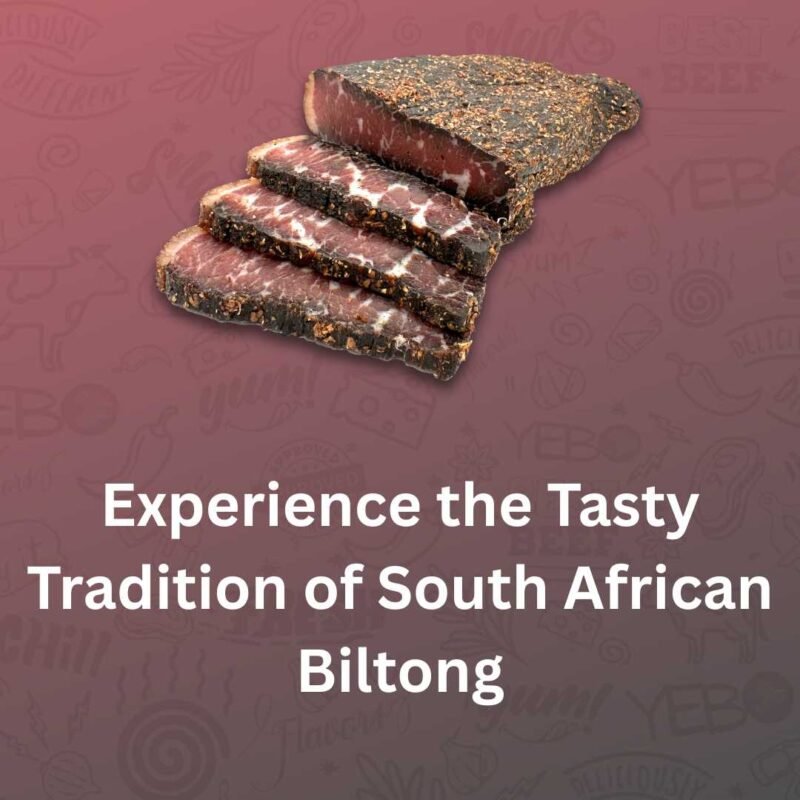
A rustic cutting board with sliced biltong, visible texture and spice edges.
We make our biltong not just for the sake of tradition, but for the joy of sharing it with others, those who know it well and those discovering it for the first time. Every time someone tries Yebo and says, “I’ve never had anything like this before,” we know we’ve done our job. Because they’re right, they haven’t.
True South African Biltong is a sensory experience. The look, the smell, the texture, the slow release of spice and salt as you chew—it’s something no machine can replicate. You can’t mass-produce character, and you can’t rush flavor. You can only make it the way it’s been made for hundreds of years: with time, air, and care.
From the field where the cattle graze to the final slice that hits your tongue, every step is connected by one thing: respect. Respect for the ingredients. Respect for the process. Respect for the heritage that made it what it is.
That’s what we believe in at Yebo. And that’s why every bite of our biltong tastes like something worth slowing down for.
It’s the taste of South Africa: bold, honest, timeless.
It’s the flavor of craftsmanship, passed down through generations.
It’s what happens when patience meets passion, when heritage meets skill, when simple ingredients meet the art of time.
From field to flavor, South African Biltong’s journey is one of transformation, not just of meat, but of meaning. It’s a reminder that even in a fast-moving world, the best things are still the ones made slowly, by hand, with care.
And that’s precisely what we do, one batch at a time.