
Blog
Spice Stories: How Traditional South African Flavors Inspire Modern Biltong

The Flavor Journey That Defines Modern Biltong
Every country has its signature flavor, that distinct taste you can identify the moment it hits your tongue. In Italy, it’s olive oil and basil. In India, it’s cumin, cardamom, and chili. In South Africa, it’s the deep, aromatic blend of coriander, pepper, vinegar, and salt, a combination that carries generations of history in every bite. That, of course, is the language of biltong, which has evolved into what we now celebrate as Modern Biltong.
You can taste South Africa in real biltong. It’s bold without being loud, fragrant without being fussy, and layered in ways that feel comforting and familiar even to those who didn’t grow up with it. The aroma of coriander and vinegar together is instantly recognizable; earthy, tangy, and a little nostalgic. When you open a fresh pack of Yebo Biltong, that scent fills the air before you even take a bite. It’s the kind of smell that turns heads and starts conversations because it feels like home to anyone who’s ever known it.
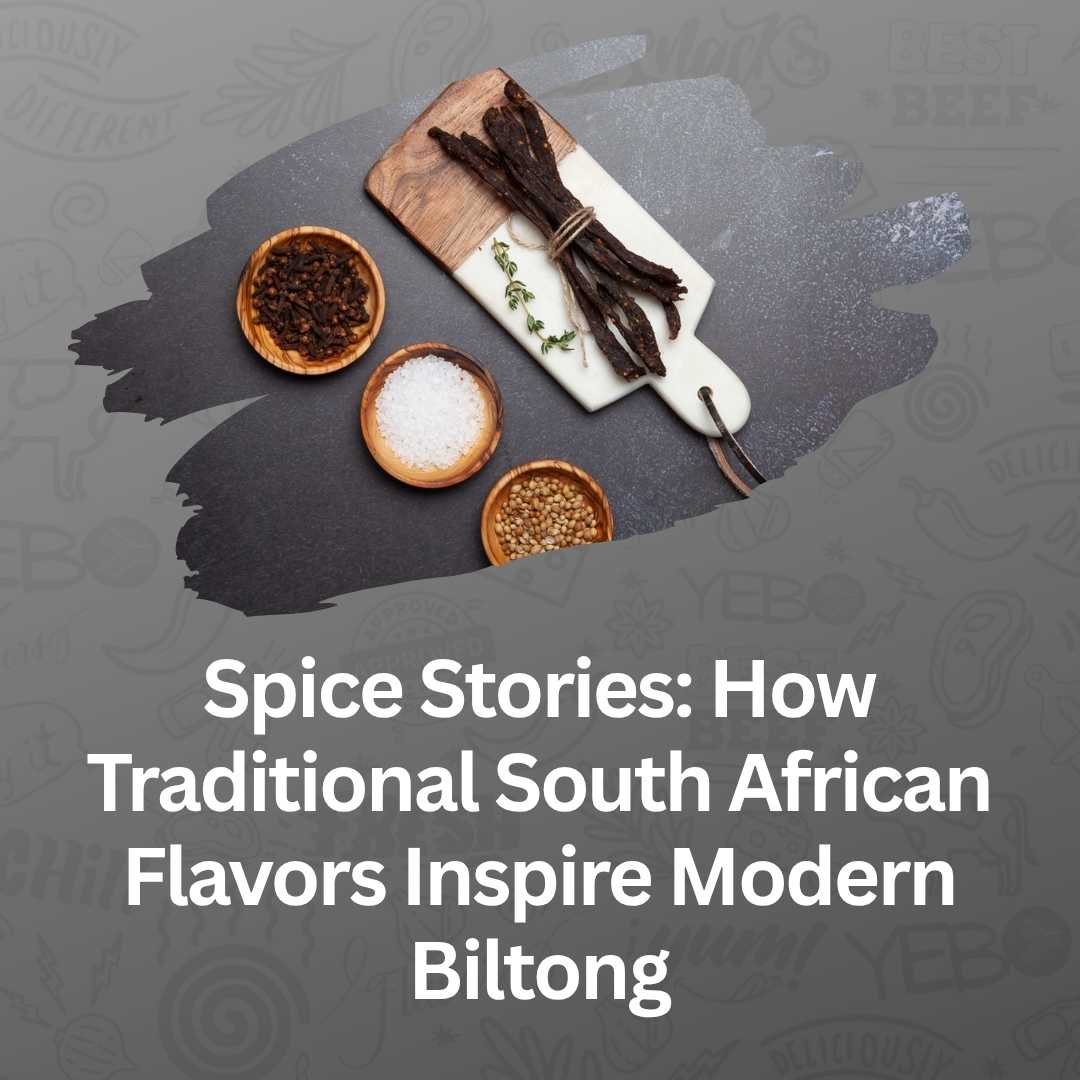
Modern Biltong reflects the rich flavors and heritage of South Africa.
The story of those spices goes back far beyond modern snack culture. South African flavor is a mosaic, built on indigenous traditions, Dutch and British preservation methods, and the influence of Indian and Malay spice traders who arrived centuries ago. Every ingredient in biltong has its own ancestry. Vinegar came from the Dutch and British pickling methods; coriander arrived with early spice routes through the Cape; and the curing process itself has deep roots in African ingenuity, where drying meat under the sun was as practical as it was flavorful. What began as survival became culture. What started as preservation became craft.
Coriander is where the magic begins. It’s the beating heart of South African seasoning. When the seeds are toasted and crushed, they release this warm, citrusy fragrance that can transform anything it touches. For biltong, coriander does double duty: it flavors and it preserves. Its natural oils protect the meat while adding that unmistakable aroma that makes South African biltong instantly different from anything else. Without coriander, it simply isn’t the same.
Then there’s black pepper; the quiet partner that gives the blend its backbone. Pepper brings sharpness and depth, balancing coriander’s brightness. It’s what makes each bite feel alive without being overwhelming. A good biltong doesn’t burn; it teases the palate. And that’s the art, flavor that excites but never exhausts.
Vinegar is perhaps the unsung hero. It’s the bridge between spice and beef, bringing everything together. A splash of vinegar tenderizes the meat, but more importantly, it gives biltong its signature tang, that clean, fresh edge that makes the flavor pop. The vinegar also connects biltong to its roots in food preservation. Long before refrigeration, it was vinegar that kept meat safe, fresh, and flavorful. When combined with salt, it becomes both a protector and an enhancer —a little chemistry that turns simple meat into something enduring.
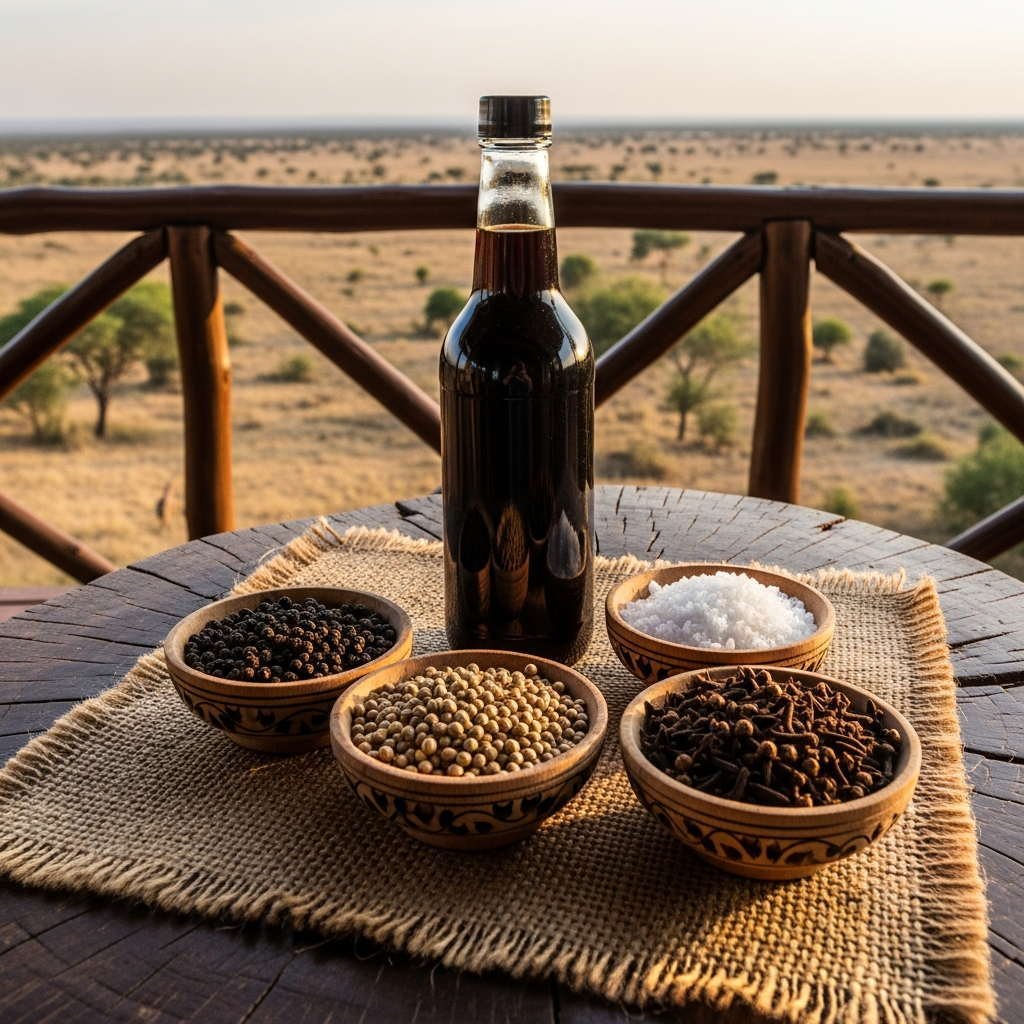
Worcestershire Sauce and spices were brought back by different ethnic groups
Worcestershire sauce came later in history but earned its place quickly, laying the foundations for Modern Biltong. It adds subtle complexity, umami, sweetness, and depth, without taking the spotlight away from the main spices. It’s like the quiet bassline in a song that you might not notice at first, but without it, the harmony would fall apart.
When these elements come together, they create something more than seasoning. They create identity. South African flavor has always been about balance —not heat or sweetness, but warmth. It’s comfort food disguised as craftsmanship, and biltong is its purest expression.
What makes Yebo Biltong special is that we haven’t tried to reinvent that balance; we’ve tried to honor it. We don’t use artificial marinades or smoky flavors. We stick to what works, the same ingredients that have seasoned South African kitchens for hundreds of years. Every batch is a continuation of that tradition. The beef is cut, seasoned by hand, and left to rest until the spices have had time to do their work. It’s not rushed, because real flavor never is.
When people taste our biltong for the first time, they often notice something they can’t quite describe. It’s not just the tenderness or the lack of sweetness, it’s the clarity of flavor. You can taste the coriander, the pepper, the tang of vinegar, and still, the beef shines through. That’s because biltong isn’t about masking flavor. It’s about revealing it.
South Africa’s history can be tasted in every spice. The indigenous Khoisan people practiced drying and curing meats long before European settlers arrived. The Dutch brought vinegar and salt preservation methods. British influence added Worcestershire sauce and black pepper to the mix. Indian and Malay traders contributed the coriander and aromatic spices that define the region’s food today. It’s one of the few culinary traditions in the world where so many cultures have blended so seamlessly, and the result is something entirely its own.
That cultural fusion is why South African food feels both rustic and sophisticated at the same time. The flavors are ancient, but they’re balanced in ways that still feel modern. And that’s what we at Yebo celebrate in every bag of modern biltong, the meeting point between history and today.
Biltong is a food of patience. It’s about trusting time and texture and knowing when to let nature do the work. Once the beef has been seasoned, it’s left to rest before being hung to air-dry slowly. During those days, the spices and vinegar don’t just sit on the surface; they seep inward, building layers of flavor that can’t be achieved any other way. The coriander mellows, the vinegar sharpens, and the aroma deepens until the entire drying room carries the scent of South African spice. When the biltong is ready, the taste is unmistakable: tangy at first, then savory, then gently spiced with warmth that lingers just long enough.
That’s the difference between handcrafted biltong and mass-produced jerky. Jerky is cooked fast and flavored with sugars and sauces. Biltong is air-dried slowly and flavored by spice and time. One depends on additives; the other depends on patience. And when you live in a world that moves as fast as ours, that patience feels like a luxury. But it’s a luxury worth keeping.
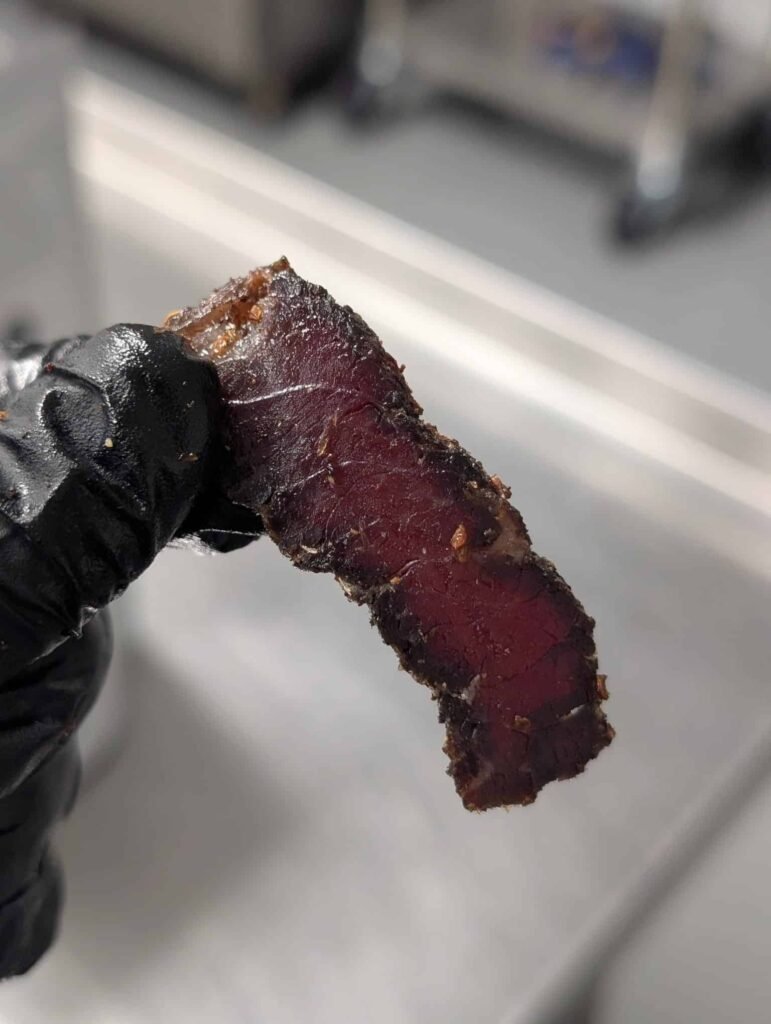
A piece of biltong from one of our packaged Biltong bags
When you open a bag of Yebo Biltong, what you’re really opening is a little time capsule of South African flavor. It’s modern packaging holding centuries of tradition. It’s coriander that once traveled the spice routes, vinegar techniques that crossed oceans, and craftsmanship that’s been handed down from generation to generation. Every piece carries that story, not in a grand, romantic way, but in a quiet, honest one.
And for South Africans living abroad, that flavor has a powerful effect. It brings home closer. The moment the smell hits, it doesn’t matter whether you’re in Johannesburg or New York; it’s the same comfort, the same pride. It’s braai smoke in the air, weekend rugby on the TV, and laughter spilling out from the kitchen. Flavor has that kind of power, to transport, to remind, to connect.
Even as biltong evolves, those traditional flavors remain the anchor. Sure, you’ll find new variations of modern biltong now: chili biltong, teriyaki biltong, peri-peri biltong, but the foundation never changes. The coriander, vinegar, pepper, and salt are always there. They’re what make it biltong, not just dried beef. And while innovation has its place, we believe in keeping those roots strong.
That’s what sets Yebo Biltong apart. We craft our biltong for modern life: clean, portable, and protein-rich, but we never lose sight of what gives it soul. Every pack is an echo of the South African spice cupboard: coriander seeds popping in a pan, the sharp tang of vinegar hitting the air, the familiar comfort of simple ingredients handled with care.
Flavor is memory, and biltong is full of them. It’s the taste of road trips, of long afternoons at the market, of sharing something simple and good with friends. The beauty of traditional South African spice is that it tells those stories without words. It’s heritage, written not on paper, but on the palate.
So, when you taste Yebo Biltong, you’re not just tasting a recipe. You’re tasting generations of flavor wisdom, the lessons of the field, the rhythms of the kitchen, and the spirit of a nation that understands the art of good food made slowly. The world around us might chase the next big flavor trend, but some things never need reinventing. A handful of beef, a touch of coriander, a splash of vinegar, and time; that’s all it’s ever taken to make something extraordinary.
In the end, that’s what keeps South African biltong timeless. It’s not the ingredients alone; it’s the story they tell together, one of balance, simplicity, and care. At Yebo, we’re proud to keep that story alive, one batch at a time. Because while the world might rush ahead, there will always be room for flavor that remembers where it came from.
Every country has its signature flavor, that distinct taste you can identify the moment it hits your tongue. In Italy, it’s olive oil and basil. In India, it’s cumin, cardamom, and chili. In South Africa, it’s the deep, aromatic blend of coriander, pepper, vinegar, and salt, a combination that carries generations of history in every bite. That, of course, is the language of biltong, which has evolved into what we now celebrate as Modern Biltong.